The before-you-shoot guide
Is your video idea
worth filming?
Before you book a shoot, give the idea an honest look. These seven checks help you explain why people would stop, keep watching and care—and how that attention helps your brand.
Our seven-question tool for reviewing social video ideas.
12 min read
The idea in one sentence
Earn attention. Make the viewing worthwhile. Give the brand a reason to be there.
- 01Stop
- 02Stay
- 03Reward
- 04Access
- 05Brand
- 06Engagement
- 07Rewatch
Before you start
First, ask yourself these questions.
Use this guide for organic social videos that introduce your brand to new people. Start by deciding who you want to reach and what you want the video to do.
- 1Who do you want to reach?
- Think about who you want to reach. Are they new to the topic, or already familiar with it?
- 2What should the video achieve?
- Choose the main goal: help more people discover the brand, attract relevant followers, bring people to your profile or website, or start a conversation.
- 3How will people watch it?
- Think about how people will watch: on a small screen, with distractions or with the sound off. Make the action and text easy to understand.
For broad reach, start with a situation lots of people can understand. A video for a small group of potential buyers can be useful too; judge it against that goal.
How social video works
Give people a reason to watch, react and remember.
Use this to plan the idea. People can react, share or leave at any point.
- 01
Get noticed
An interesting visual and a clear first-frame caption make someone pause.
STOP + ACCESS - 02
Make watching worthwhile
They enjoy the action, learn something or feel something. The reward can be immediate.
STAY + REWARD - 03
Give them a reason to act
They share with a friend, save for later, join the conversation or watch again.
ENGAGEMENT + REWATCH - 04
Help the brand
They remember the product, follow for more, visit the profile or take a relevant next step.
BRAND
For broad discovery, make the situation easy for a new viewer to enter. Keep the brand relevant to what they are enjoying.
The five core checks
What makes a good social media video: a hook, a reason to watch, a reward, a clear idea and a brand connection.
Stop Core check
What makes someone stop scrolling?
The first 1–2 seconds should give people a reason to pause. Use a clear visual, action or short piece of on-screen text that makes the idea interesting immediately.
How to build a good hook
- Unexpected visualSomething unusual is already happening.
- A familiar problemShow a situation your audience recognizes.
- Humour or a strong statementGive them a laugh, an unexpected claim or a point they want explained.
- A clear questionMake viewers curious about an answer they want to know.
- Clear first-frame textA short headline can explain the situation immediately. Add readable captions for spoken words so the idea still works with the sound off.
Start on the moment that earns attention. Move the introduction later if it is needed.
Stay Core check
Why would they keep watching?
Keep the viewing enjoyable or interesting after the opening. That can mean following a story, learning something, or spending a few seconds taking in a funny visual. A video does not need to save everything for the end.
Reasons people keep watching
- The resultWill the challenge, experiment or transformation work?
- The answerWhat explains the opening claim or problem?
- A reaction or punchlineHow will this person respond? How does the joke end?
- An unfolding processEach moment adds something worth seeing.
- An instant visual jokeThe funny action and on-screen details are already rewarding to watch.
A full story arc is optional. An interesting action or detail can hold attention on its own.
Reward Core check
What do they get for their time?
Watching should feel worthwhile. Name the payoff and make sure it delivers what the opening promised. It can happen early, late or throughout the video.
What can the viewer get?
- EntertainmentA joke, a funny reaction or an enjoyable story.
- Useful knowledgeA tip, explanation or solution they can use.
- EmotionA moment that makes them feel understood, moved or inspired.
- Surprise or satisfactionAn unexpected result, a reveal or a completed transformation.
A clever hook needs a payoff. Make the promise and the reward match.
Access Core check
Can a new viewer get it?
Someone who has never heard of your brand should be able to understand the situation quickly. Start with a clear visual and add short on-screen text where it helps. Do not make understanding depend entirely on audio.
Make the idea easy to understand
- A visual that explains the actionLet people see what is happening. Clear actions can work across languages, though some ideas still need context.
- Text for the missing contextA short headline can explain what the visual alone cannot. Keep it readable on a phone.
- Captions when people speakMake the important spoken information available with the sound off.
- No unexplained referencesExplain any name, joke or specialist term a new viewer needs to understand. For broad reach, keep that explanation short.
Watch it once with the sound off. If the idea becomes confusing, improve the visuals or add clear text.
Brand Core check
What does the brand gain?
Attention is useful when it reaches the right people and leaves something relevant behind. Say what someone should remember or do after watching.
Ways the video can help the brand
- RecognitionThey remember the brand, product or person.
- A relevant associationThey connect it with a useful idea, personality or situation.
- A product roleThe product matters to the story or demonstration.
- A natural next stepIf traffic is the goal, they know where to go and why.
A sale is not the only useful outcome. Recognition and a relevant audience can be the goal.
The two amplifiers
Give people more reasons to interact and watch again.
Engagement Amplifier
Why would they interact?
Name a believable action and its reason. “Comment below” is a request; the idea still needs to give viewers something they want to respond to.
Give people reasons to interact
- ShareA friend would enjoy it, relate to it or need to see it.
- SaveA tutorial, checklist or recommendation is useful enough to return to.
- CommentThey have an opinion, experience, answer or question—or a friend to tag.
- RepostThey agree with the message or think their own audience should see it.
Look for several natural reasons to share, save, comment or repost. Different viewers may want to do different things.
Rewatch Amplifier
Why would they watch again?
This asks what happens after the first viewing. Would someone choose to replay it to find, understand or enjoy something? An automatic loop alone is not the answer.
Reasons to replay
- A detail to catchA background gag, clue or visual detail they missed.
- A reveal that changes the openingThe ending gives the first scene a second meaning.
- A moment worth repeatingA joke, performance or satisfying result is enjoyable again.
STAY is about continuing the first viewing. REWATCH is about choosing a second one.
A real example | Sleepy Tofu
Running 5k on our office sofa
A short timelapse of running on the office sofa, with an on-screen caption and Strava run stats. The joke is visible straight away; there is no final reveal to wait for.
- Stop
- An office sofa becomes the setting for a serious running session. The caption and Strava run stats reinforce the absurd contrast.
- Stay
- The ridiculous action holds attention for a few more seconds while viewers take in the movement, caption and running stats. They are not waiting for the finish.
- Reward
- Immediate entertainment: a serious Strava run, a sofa and an office challenge combined into one absurd scene.
- Access
- The running is visible, and the short caption explains the 5k premise without needing audio or prior brand knowledge.
- Brand
- The sofa is central to the action. The product stays visible throughout the joke.
This is an instant-reward idea. STAY can mean enjoying or inspecting what is already on screen; a delayed ending is optional.
See the Sleepy Tofu case study →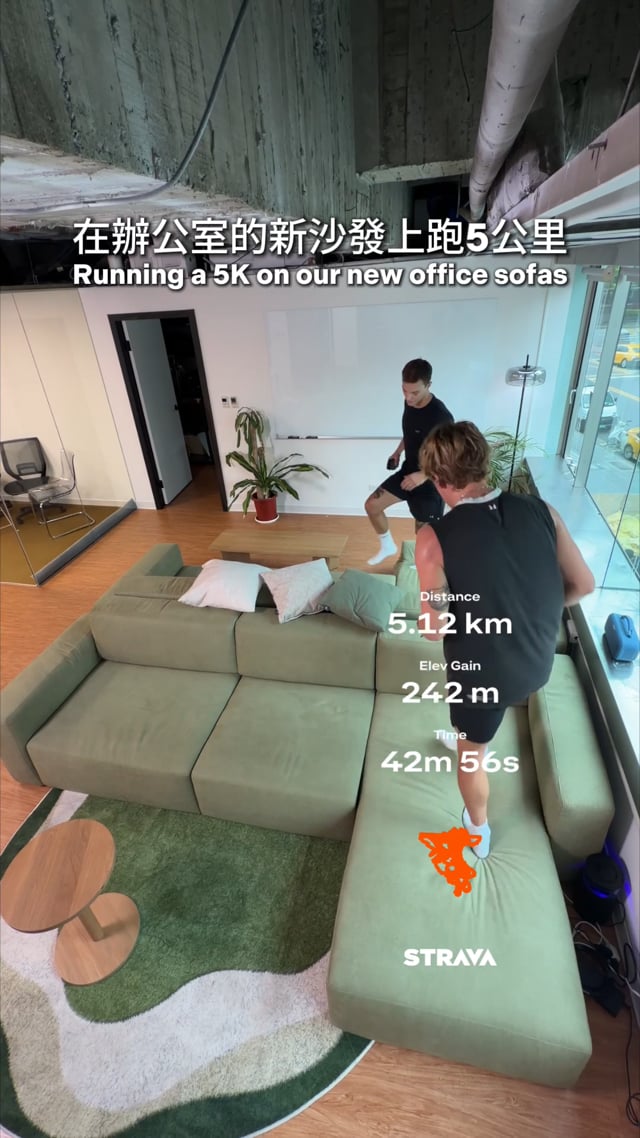
Watch the example
Running 5k on our office sofa
Sleepy Tofu × OnTrack. A short office-running timelapse with a 5k caption and Strava run stats on screen.
Plays muted. Tap the sound button to listen.
Check your concept before filming
How to check your video idea
- 01
Describe the video
Tell your team what happens, what viewers see at the start and what makes it enjoyable or useful. A rough script, sketch or reference video helps.
- 02
Answer the seven questions
Explain why you chose each answer. For example: “The opening shows someone running on a sofa, so the unusual action gives people a reason to stop.”
- 03
Improve the weak parts
If an answer is unclear, decide what to change before filming. Rewrite the opening, simplify the explanation or make the brand connection easier to notice.
Leave room for an unusual idea.
- Familiar formats and recurring series can work. Ask whether this particular idea is interesting and easy to understand.
- A deliberately niche idea can work for a defined audience. Explain who that audience is.
- For a deliberate exception, name the rule you are breaking, the strength that compensates and what you want to learn.
The original team framework allows up to one wildcard per batch. That is a team decision; Stop or Scroll does not approve exceptions.
After you publish
What do your results actually tell you?
Read attention, interactions and brand results separately, then compare them. A strong result in one area does not automatically explain the others.
- AttentionLook at how long people stayed and where they left. Did the opening interest them, and did the next few seconds keep giving them something worthwhile?
- InteractionLook at what people wanted to pass on, keep for later or respond to. Read the comments to understand their reaction.
- Brand resultsAsk whether the attention helped people understand, remember or become interested in the brand. Use relevant responses and business outcomes to assess the goal.
What attention can tell you
- Time spent watching
- Longer viewing can suggest interest. Look at the length of the video and what the viewer gets from that time. A short video can give a complete reward quickly.
- Average viewing time
- Use it to ask how much of the experience people usually see. Eight seconds on a 10-second video is different from eight seconds on a 45-second one.
- Retention
- Look at how attention changes as the video progresses. A drop shows where people left, but you still need to look at the scene to understand why.
Example retention patterns
Where did viewers leave?
01 | A steep drop at the start
Review the first visual, first-frame text and audience fit. The opening may be slow or confusing, or the wrong people may have seen it.
02 | People stay, then leave
The opening may have worked. Review the exact drop: a slow section, repeated information, an early payoff or a promise the next scene does not continue. This alone does not prove a weak reward.
03 | More sustained viewing
The video held more attention. Now check who watched, how they reacted and what the brand gained. Strong retention does not prove sales or brand recall.
A quick joke can give people what they came for in a few seconds. A replay can mean they enjoyed it or wanted to understand it. Consider the audience, video length and purpose before judging the pattern.
What might each interaction mean?
People interact for different reasons: enjoyment, usefulness, self-expression or connection. These are questions to consider, not fixed meanings for every action.
- Like
A quick sign of enjoyment, agreement or recognition.
What did people enjoy or agree with?
- Share / send
They want a particular friend to see something funny, relatable or useful.
Who is it for, and why would they send it?
- Save
They may want to use the information, revisit a recommendation or watch later.
What would make it useful to return to?
- Comment / tag
An opinion, question, experience, joke or invitation to a friend. Disagreement can create comments too.
Are people interested, confused, asking to buy or just arguing?
- Repost
They want their own audience to see it: shared interests, agreement, humour or useful information.
What does reposting let them express or pass on?
- Follow
They expect more content they will want from this account.
Does the profile clearly promise more of what they came for?
Match the result to the goal.
Lots of views, few follows
People may enjoy one video without wanting more from that account. Check whether it reached the right audience and whether the account gives them a clear reason to return. Entertainment is still value.
Fewer views, strong sales or enquiries
A specific idea may appeal to fewer people but matter more to those who need the product. Judge it by whether it reaches relevant potential buyers and helps the business goal.
Broad reach with a clear brand connection
An easy-to-understand situation can introduce the brand to new people. Make the product or message part of what they enjoy, so the attention has a relevant connection to the brand.
OnTrack tool
Stop or Scroll
Try our social video concept checker.
Answer seven questions, get a checklist score and review the weak spots with your team.
Open Stop or Scroll →The score is a checklist result, not your chance of going viral.
A few useful answers
Does every video need to educate?
No. Entertainment, emotion, surprise and satisfaction can all be rewards. Name what makes the viewing worthwhile for this audience.
Does every idea have to be completely original?
No. Familiar situations can make an idea easy to understand. Your version still needs an interesting opening, a worthwhile experience and a clear brand connection.
Can this predict the results?
No. It reviews the reasoning behind your answers. Production, distribution and the audience’s actual response still need to be tested.
Can I use it for paid ads?
This guide is for organic social video. Direct-response ads need additional checks for the offer, proof, conversion action and testing conditions.
More guides